
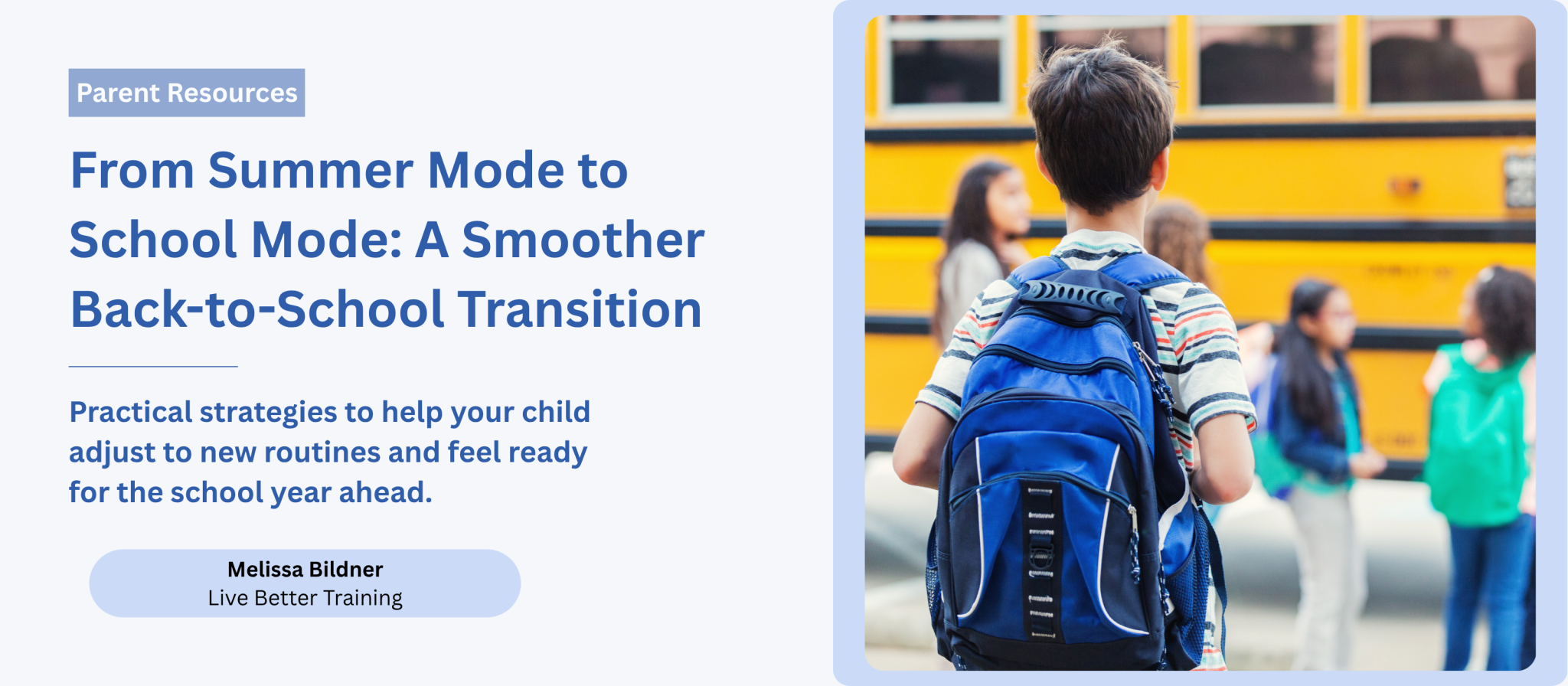
The hardest part of summer is getting ready to go back to school. It often feels like summer has just started, and your family is finally settling into a rhythm that doesn’t include early wake-ups or homework. Kids with ADHD and learning differences often have busy, disorganized thoughts, big feelings, and a hard time seeing what comes next—even five minutes from now.
It may have taken weeks to adjust to a different schedule, and the thought of shifting back into the daily grind can be incredibly daunting. You know your child may not handle change well, may not love school, or may simply prefer to keep playing. Your child may also need more support with transitions than other children, for now.
If your anxiety is building just thinking about the start of school, this step-by-step parenting process can help you feel more confident and in control. It will also help your child feel calmer and more prepared for the transition ahead!
STEP 1: Start With Your Own Goals
Get clear on what matters most to you about getting your child ready for school.
- What is important to you about getting your child ready for school?
- What matters more right now: that your child feels happy about school or that they can cooperate with the routine?
- What would a smoother transition back to school look like for your family?
Step 1 helps you stay grounded before you talk with your child about making this shift.
STEP 2: Understand Your Child’s Transition Style
Notice what happens for your child during everyday transitions.
- How does your child react when they have to stop playing and come to dinner?
- How does your child react if there is a lot of warning and explanation before a shift in activity?
- What does a “successful” transition with your child look like?
Step 2 helps you notice your child’s patterns. Once you see what usually happens, the behavior becomes more predictable—and easier to prepare for.
STEP 3: Listen Before You Solve
Connect with your child so you can understand what they are thinking and feeling.
- Ask your child how they feel about going back to school. Let them speak—this is the hard part!
- Actively listen by repeating back what they say without judgment or adding your own feelings or opinion.
- Affirm to your child that their feelings are valid and real.
Step 3 validates your child’s thoughts and feelings. It lets them know you are there to support them, not argue or lecture them out of what they feel. Connecting with your child is the number one thing you can do to ease the transition back to school.

STEP 4: Create a Plan Together
Strategize with your child about how to make transitioning back to school easier.
- Ask your child what they think would make adjusting to a school schedule easier. Not going to school is not an option, of course, and let your child speak without interruption.
- After your child shares their ideas, ask if you could share yours and offer your strategies for making the transition easier.
- Use a whiteboard or paper to write down everyone’s ideas and ask what your child is willing to commit to.
This last step is the most critical. It does not mean you have to do exactly what your child suggests, but they will feel heard because you gave them a say.
Back-to-School Action Plan
To help you get started, here are a few strategies that can make the back-to-school transition easier. Try starting about a week before the first day.
- Visit the school, classroom, and teacher if possible—even if it’s the same school as last year.
- Map out the school day with a calendar and pictures. Include your child by having them draw the pictures, and talk through the schedule in detail—from brushing teeth to eating breakfast to getting out the door.
- Decide together when your child will pick out clothes for the school day—the night before, in the morning, or another time that works.
- Have a practice day. Start the night before and continue into the morning to remind your child what it feels like to get up early, get dressed, and get out the door.
Your goal is to make transitions less stressful and more manageable while preserving your relationship with your children. A little preparation, a lot of connection, and a clear plan can go a long way toward easing the transition from summer mode to school mode.

About the Author
Melissa Bildner is a Certified Professional Coach and Certified ADHD/Executive Function Parent Coach who specializes in helping families navigate the challenges of raising children with ADHD and executive functioning differences. Drawing from both her professional training and nearly two decades of personal experience parenting a family affected by ADHD, Melissa provides practical, compassionate strategies that help parents build stronger connections with their children while creating calmer, more collaborative home environments. She is the founder of Live Better LLC, where she offers parent coaching, workshops, and educational resources for families.