
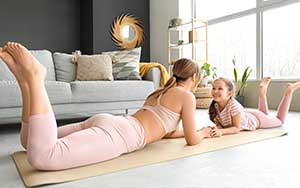
 Many children with learning differences struggle with focus, frustration, and emotional regulation. And while tutoring and therapy can be powerful, sometimes we skip over a foundational support system: the nervous system itself. That’s where somatic tools come in.“Somatic” means of the body. Somatic tools are body-based practices that help regulate the nervous system, shifting a child out of “fight, flight, or freeze” and into a calmer, more connected state where learning and communication are easier.
When a child feels safe and settled in their body, they’re more available for all the things we want them to do—whether it’s clearing their dinner plate, staying curious during reading, or trying again when a math problem is tough.
Physiology Matters
Kids with ADHD, sensory processing challenges, dyslexia, or other learning differences often carry a higher baseline of stress. Their bodies may be stuck in a “go-go-go” state, or flip into overwhelm quickly. These physiological patterns show up as behavior: zoning out, fidgeting, arguing, shutting down.
You might be thinking that your child doesn’t seem anxious. But dysregulation doesn’t always look like anxiety. It can look like silliness, avoidance, inflexibility, or irritability.
Somatic tools offer a path to help kids feel more settled in their bodies—and that creates the foundation for better focus, fewer meltdowns, and stronger self-awareness.
Somatic Tools to Try at Home
These tools don’t require any special equipment, training, or a lot of time. What they do require is your willingness to slow down and connect. Practicing them together can strengthen your relationship while giving your child tools to manage big feelings.
1. Starfish Breathing Stretch. This is one of the most powerful tools I teach—and it’s a full-body reset.
What it is: A calming breath paired with an expansive body stretch that mimics a starfish stretching out and curling back in.
Why it works: This practice pairs breath and movement to help kids shift out of a stress response and regulate heart rate variability.
How to do it:
- Have your child lie on their back with arms and legs stretched out wide, like a starfish. Some kids also like to do this exercise in a standing position.
- As they breathe in, stretch long and wide, reaching fingers and toes out.
- As they breathe out, curl into a ball, hugging knees to chest or tucking into a fetal position.
- Repeat 3–5 times slowly.
Try it on the floor, on a yoga mat, or even at bedtime. You can do it with them to model the rhythm and pacing.
2. Soothing Rubbing (Self-Havening): This gentle, rhythmic rubbing technique is soothing and easy to use anytime. It’s also one of the most flexible tools. Kids can adapt it to their sensory preferences and even use it subtly in public or school settings.
What it is: A calming practice where a child uses slow, comforting strokes on the body to soothe the nervous system.
Why it works: This type of touch helps the brain shift out of survival mode. It promotes calming delta brainwaves and calms the amygdala, which is the part of the brain that triggers fight-or-flight.
How to do it:
- Teach your child a few rubbing patterns and let them explore what feels good:
- Shoulder to elbow: Cross the arms and rub gently downward from the shoulder.
- Forehead to ears: Use two full hands to stroke from the center of the face, out towards the temples, covering the eyes, cheeks, and mouth.
- Wrist to fingertips: Use the fingertips of one hand to rub from the wrist to the fingertips of the other, alternating. (This version is great for subtle use under a desk at school.)
- Encourage your child to vary the pressure and speed to find the touch that’s most soothing to them.
- Use a calm voice to guide: “Let’s just do some slow rubs and help your brain feel safe.”
This tool can become a go-to during transitions, at bedtime, or even during homework.
3. Squeeze & Release (Progressive Muscle Relaxation): Some kids hold onto tension in their bodies like a clenched fist they can’t release. This playful practice helps them recognize and relax that tension.
What it is: A step-by-step process where your child squeezes and releases different muscle groups.
Why it works: Progressive muscle relaxation helps reduce physical tension and activates the parasympathetic nervous system (the “rest and digest” state). It also builds interoception, which is the awareness of what’s happening inside their body.
How to do it:
- Have your child lie down or sit comfortably.
- Starting at the feet, ask them to squeeze the muscles tight, like they’re squishing sand between their toes.
- Hold for a few seconds, then release.
- Move up the body: legs, tummy, hands, arms, shoulders, face.
Make it playful! Try squeezing out lemon juice, melting tension like a marshmallow, or any other imagery that resonates with your child.
Final Thoughts: It Starts with the Body
You don’t have to be a therapist or a neuro expert to help your child regulate. You just need a few simple tools—and the patience to practice them together. The more consistently your child learns to calm their body, the more they’ll build trust in themselves.
Somatic tools aren’t just for calming down in the moment—they’re building blocks for resilience, cognitive flexibility, and self-control over time.
You don’t have to try everything at once. Pick one tool and play with it for a week. See what shifts. And remember: you’re not just helping your child feel better—you’re helping their brain work better too.
Jenna Prada, M.Ed, a certified teacher and administrator, is the Director of Learning at Sadar Psychological.