
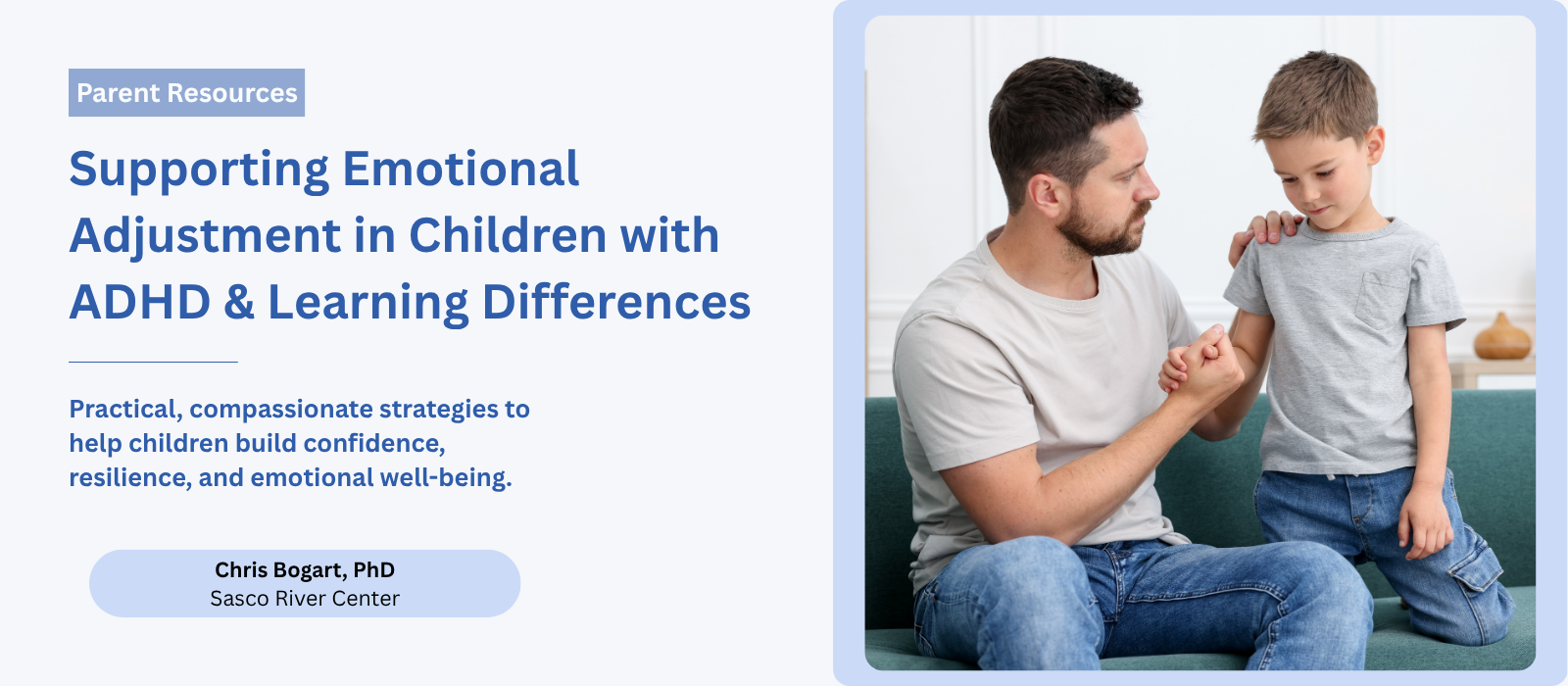
Children with ADHD and learning differences often work much harder than others realize just to get through the school day. Many are managing constant effort behind the scenes: trying to stay focused, keep up with work, mask frustration, avoid mistakes, navigate social situations, and recover from repeated feelings of discouragement or failure. As parents, caregivers, and educators, supporting emotional well-being is inseparable from supporting learning.
Here are several evidence-based ways families can help children build confidence, resilience, and emotional regulation over time, core skills that are essential for long-term success.
Validate Feelings Before Solving Problems
When children are struggling emotionally, adults naturally want to fix the problem quickly or help the child move on. But before children can problem-solve effectively, they often need to feel understood first. Many children with ADHD and learning differences experience emotions very intensely, especially when they feel embarrassed, overwhelmed, or discouraged.
Leading with simple responses like:
- “That sounds really frustrating.”
- “I can see why you’re upset.”
- “That was a hard situation.”
can help children feel supported and emotionally safe before moving toward solutions.
Focus on Effort and Persistence, Not Just Performance
Healthy confidence grows when children learn that effort, persistence, problem-solving, and recovery after setbacks matter just as much as outcomes. Praising only grades or achievements can unintentionally reinforce the idea that their value depends on performance.
Instead, notice things like:
- Trying again after a setback
- Asking for help
- Staying with a difficult task
- Using coping strategies
- Recovering after frustration
Celebrating perseverance helps children develop resilience and a healthier sense of self-worth.
Understand That Behavior Often Communicates Stress
Irritability, shutdowns, perfectionism, avoidance, emotional outbursts, or even “oppositional” behavior are often signs that a child is overwhelmed rather than intentionally defiant.
Children with ADHD and learning differences may spend much of the day trying to manage attention, emotions, social expectations, and academic demands. When stress builds up, behavior is often the first signal that additional support is needed.
Looking beneath the behavior can help adults respond with empathy, structure, and curiosity rather than relying on punishment alone.

Create a Judgment-Free Space for Conversation
Children are more likely to open up when they feel listened to rather than immediately corrected, reassured, or lectured. Creating calm, judgment-free opportunities for conversation helps children feel emotionally safe.
Sometimes the most supportive response is simply listening:
- “Tell me more about that.”
- “What was the hardest part?”
- “What do you wish people understood?”
Feeling heard strengthens connection and encourages children to communicate more openly over time.
Protect Downtime and Recovery Time
Many neurodivergent children spend the school day working overtime mentally and emotionally. By the end of the day, they may feel exhausted even if it is not always obvious externally.
Downtime is not a luxury or reward that must be earned. For many neurodivergent children, it is a genuine emotional and neurological need. It is essential for emotional recovery and regulation. Quiet time, movement, hobbies, creativity, outdoor play, and unstructured breaks can all help children recharge.
Encourage Self-Awareness and Self-Advocacy
When children understand that everyone’s brain works differently, they are often better able to develop self-compassion and independence instead of shame.
Children benefit from learning:
- What environments help them focus
- What situations feel overwhelming
- Which coping strategies work best
- How to ask for support when needed
Self-awareness and self-advocacy are lifelong skills that can improve both emotional wel-lbeing and academic success.
Partner Closely With Schools
Learning and emotional well-being are deeply connected. When parents, teachers, and support staff communicate openly, children benefit from greater consistency and understanding across environments.
Sharing observations about stress, emotional changes, academic challenges, or successful strategies can help adults better support the child as a team.
Highlight Strengths and Interests Often
Children thrive when they are recognized for more than their struggles. While support and intervention are important, it is equally important to nurture the things that make children feel capable, confident, and valued.
Creativity, humor, kindness, curiosity, leadership, problem-solving, artistic ability, empathy, and perseverance all deserve attention, encouragement, and celebration.
Celebrate Small Wins
Emotional growth is rarely linear. Progress often comes in small steps, especially during stressful periods or transitions.
A child who:
- recovers from frustration more quickly,
- asks for help instead of shutting down,
- tries something new,
- or uses a coping skill independently
is making meaningful progress.
Recognizing these small victories helps children build confidence and reminds them that growth takes time.
Supporting children with ADHD and learning differences through emotional struggles can be exhausting and emotionally demanding for parents as well. Consistency, connection, and progress over time matter far more than getting every moment “right.” It is about helping children feel understood, supported, capable, and valued for who they are, both inside and outside the classroom.