
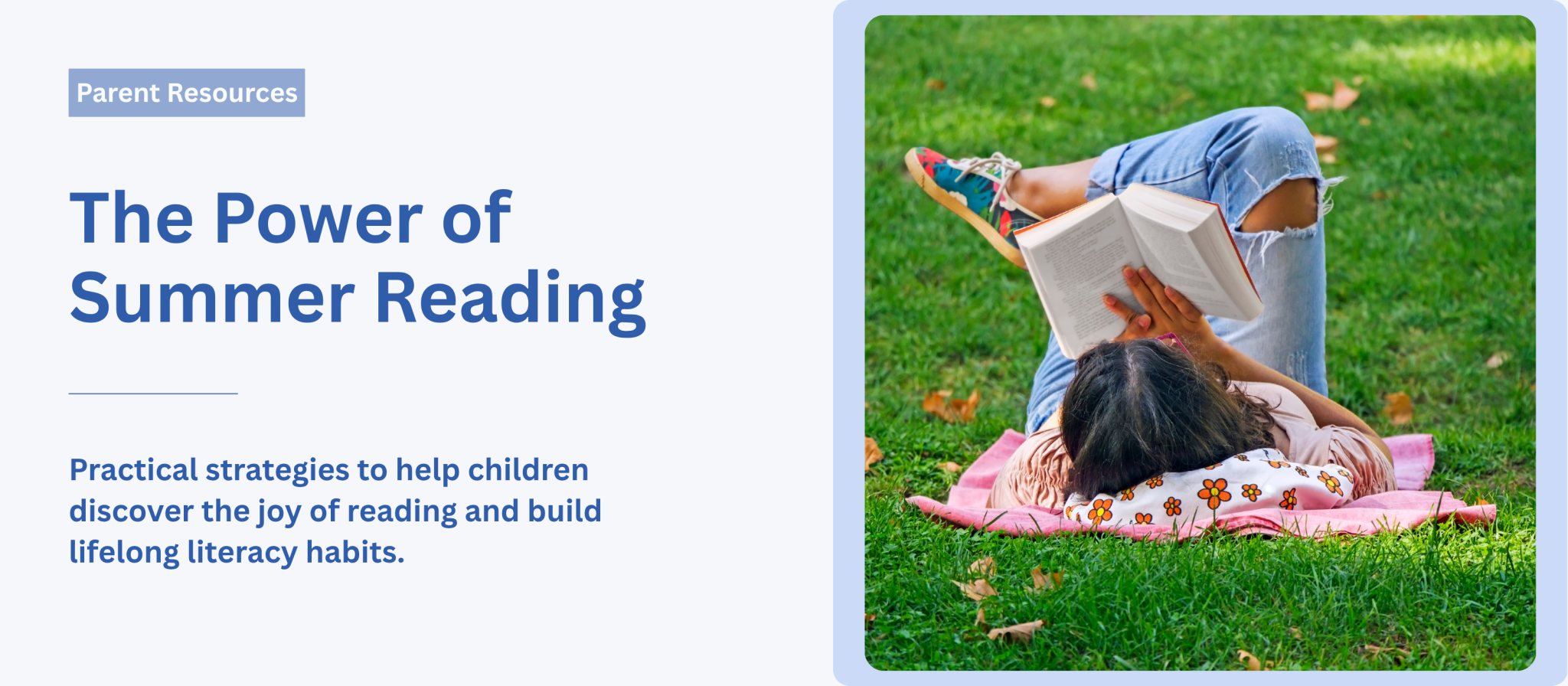
Summer offers children a chance to slow down, explore new interests, and enjoy learning in different ways. One of the simplest, and most beneficial, activities families can encourage during the summer months is reading for pleasure.
Research consistently shows that reading for enjoyment provides benefits that extend far beyond academics. Children who read regularly for pleasure tend to develop stronger vocabulary, improved reading comprehension, and better writing skills. Reading has also been linked to increased empathy, creativity, imagination, and overall well-being. In fact, studies have found that children who enjoy reading in their free time often perform better academically across multiple subject areas later in life.
At the same time, fewer children are reading for enjoyment than in previous generations. Recent studies suggest that children’s reading engagement remains below pre-pandemic levels, making it more important than ever to help young people discover books and reading experiences that spark their interest.
Summer presents a wonderful opportunity to do just that. Without the demands of homework and school assignments, children can rediscover reading as something enjoyable rather than something they have to do.

Helping Children Discover the Joy of Reading
Let Children Choose What They Read
One of the best ways to encourage reading is to give children ownership over their choices. Whether they enjoy fantasy novels, mysteries, sports books, graphic novels, biographies, magazines, or books about animals and science, allowing children to explore their interests can help make reading more meaningful and enjoyable.
Remember: the goal is not to finish a certain number of books—it is to help children develop a positive relationship with reading.
All Reading Counts
Reading does not have to look the same for every child. Graphic novels, audiobooks, cookbooks, joke books, magazines, and nonfiction books about favorite topics all help build vocabulary, comprehension, and background knowledge.
This can be especially important for children with learning and attention differences, who may thrive when given flexibility in how they engage with books and stories.
Visit the Public Library
Libraries are wonderful summer destinations and often offer reading challenges, special events, and child-friendly incentives that encourage children to read. Librarians can also help families discover books that match a child’s interests and reading level.
Create Fun Reading Spaces
Mix it up! Reading doesn’t have to happen at a desk or in a bedroom. Encourage your child to read under a shady tree, in a hammock, at the beach, on a picnic blanket, or during a quiet moment by the pool.
Making reading feel special can help children build positive associations with books.
Read Together & Model
Reading together remains valuable at every age.
With younger children, take turns reading pages and talking about the story as you go. Older children and teens may enjoy reading the same book as a parent, sibling, or friend and discussing it afterward, creating a simple family book club.
Children notice when the adults in their lives read. Seeing parents and caregivers enjoy books, newspapers, magazines, or audiobooks sends an important message. Reading is not simply a school activity but a meaningful and enjoyable part of everyday life.

Keep It Consistent
Summer schedules are often more relaxed, but setting aside even 15–20 minutes each day for reading can make a meaningful difference. Consistency matters more than duration. Small, regular opportunities to read help children continue building skills while fostering confidence, curiosity, and independence.
Reading for pleasure is about much more than maintaining academic skills over the summer. It is an opportunity for children to discover new interests, build empathy and imagination, strengthen literacy skills, and develop a lifelong love of learning.
By helping children find books that spark their curiosity and creating opportunities to read in enjoyable ways, families can nurture reading habits that continue long after summer ends.
Sources & Additional Reading
- Education Week. Heubeck, E. (2025). Fewer Parents Are Reading Aloud to Their Kids. Why That Matters. https://www.edweek.org/teaching-learning/fewer-parents-are-reading-aloud-to-their-kids-why-that-matters/2025/06
- Education Week. Heubeck, E. (2023). Kids Aren’t Reading for Pleasure as Much. Summer Is the Time to Reverse That https://www.edweek.org/teaching-learning/kids-arent-reading-for-pleasure-as-much-summer-is-the-time-to-reverse-that/2023/06
- OECD. (2021). 21st-Century Readers: Developing Literacy Skills in a Digital World. Retrieved from: https://www.oecd.org
- Brookings. (2017). Summer Learning Loss: What it is and what we can do about it? https://www.brookings.edu/articles/summer-learning-loss-what-is-it-and-what-can-we-do-about-it/
- World Literacy Foundation. Reading Aloud Improves Literacy Development. https://worldliteracyfoundation.org/reading-aloud-improves-literacy-development/